Preheat Temperature Reference Table — AWS D1.1 & ASME B31.3 Quick Look-Up for Welding Engineers
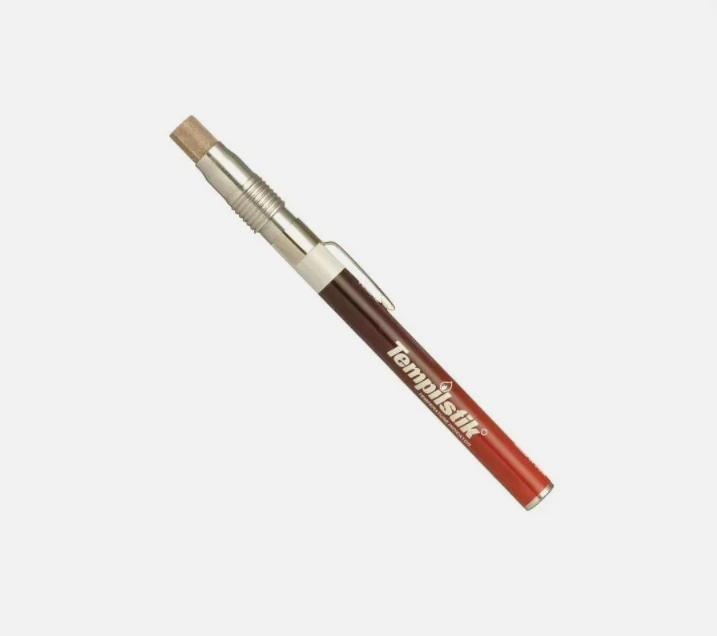
Preheat temperature is one of the most critical welding quality parameters, particularly for thick carbon steel, low-alloy steel, pressure piping, and offshore structures. In practice, welding engineers frequently need a quick reference table to confirm preheat temperature requirements for materials such as A36, A572, P11, P22, P91, P92, and Duplex 2205, alongside the correct Tempilstik® part number for field verification.
This article provides quick-reference preheat temperature guidance for commonly used industrial materials, drawn from AWS D1.1 and ASME B31.3. The values presented here are intended as an initial technical reference only — always defer to the approved WPS/PQR, the applicable project standard, and owner specification for final preheat requirements.
Why Preheat Temperature Control Matters
Preheat reduces the cooling rate of the HAZ, limits the risk of hydrogen-induced cold cracking, stabilizes weld metal microstructure, and supports hydrogen diffusion out of the joint. These effects are especially critical when welding high-carbon-equivalent steel, thick base metal, or material operating under high pressure or elevated temperature service conditions.
In oil and gas, power generation, process piping, and heavy structural fabrication in Vietnam, preheat requirements are typically specified in the WPS. QC inspectors verify the condition before the welder strikes the arc, during multi-pass welding to control interpass temperature, and sometimes after welding where the code requires it.
Key reasons for controlling preheat:
- Reduce hydrogen cracking risk at the HAZ and weld root
- Maintain weld quality consistency for outdoor or offshore construction
- Ensure WPS, ITP, and owner specification compliance for acceptance testing
- Support interpass temperature control in multi-pass welding
Quick Reference Preheat Table — Common Industrial Materials
Reference values for initial guidance — always verify against the approved WPS before production welding
| Material | Common Application | Reference Preheat Range | Suggested Tempilstik® |
|---|---|---|---|
| A36 | Carbon steel structures | 50–100°C (122–212°F) — thickness dependent | #28006 (150°F/66°C) or #28016 (225°F/107°C) |
| A572 Gr.50/65 | High-strength structural steel | 75–125°C (167–257°F) | #28007 / #28016 / #28019 |
| P11 (A335 P11) | Steam boiler tubes, power plant piping | 150–200°C (302–392°F) | #28318 / #28327 |
| P22 (A335 P22) | High-temperature process piping | 200–250°C (392–482°F) | #28327 / #28039 |
| P91 (A335 P91) | High-pressure boiler / power plant steam piping | 200–300°C (392–572°F) | #28327 / #28039 / #28053 |
| P92 (A335 P92) | High-efficiency power generation systems | 200–300°C (392–572°F) | #28327 / #28039 / #28053 |
| Duplex 2205 | Corrosion-resistant vessels, piping, offshore | Typically low or not required — control interpass ≤ 150°C | Per WPS interpass limit — #28318 (302°F/150°C) |
AWS D1.1 and ASME B31.3 — Key Practical Notes
For structural steelwork, AWS D1.1 establishes minimum preheat based on the steel category determined by Carbon Equivalent (CE), base metal thickness, and welding process. For process piping, ASME B31.3 uses the P-Number classification system combined with WPS requirements, material characteristics, and owner specification to define preheat and interpass limits.
The key principle: do not apply a single fixed value for all cases. Full guidance for both codes with complete tables is in:
- Preheat Temperature for Carbon Steel Welding — AWS D1.1 & ASME B31.3 Complete Reference
- AWS D1.1 Preheat Requirements — Structural Steel Code Guide
- Preheat Lookup Table by Steel Type — AWS D1.1, ASME B31.3, API 1104
Offshore and Heavy Industrial Field Conditions
In offshore environments, refineries, power plants, and outdoor maintenance sites, field conditions can cause surface temperature to drop rapidly after heating. Wind, humidity, rain, prolonged outdoor storage of base metal, or large-mass structures all affect heat retention.
For this reason, QC inspection should be performed at the actual weld zone rather than at a location remote from the heat source. For thick pipe or structural members, ensure the heated zone is wide enough to avoid situations where the surface reads at temperature while the core mass remains cold.
- Verify preheat temperature from the approved WPS/PQR before selecting part number
- Confirm material grade, thickness, and welding process before setting preheat level
- Clean measurement surface before applying the crayon — remove loose mill scale, oil, or moisture
- Heat the area evenly around the joint — do not concentrate heat at a single point
- Re-verify if a long hold time has elapsed or if wind has cooled the surface
- Do not substitute this table for the approved WPS, project standard, or welding engineer's instruction
Selecting the Tempilstik® Rating for Your WPS
The simplest selection method is based directly on the WPS minimum preheat temperature. If the WPS specifies a minimum of 150°C, the QC team selects the Tempilstik® rated at 150°C. When the crayon mark changes state (solid to liquid) on the surface, it confirms that location has reached the required threshold temperature.
For applications requiring control of both minimum preheat and maximum interpass temperature, use two crayons: one at the minimum preheat level to confirm the floor, and one at the maximum interpass level to verify the ceiling is not exceeded. This is particularly important for Duplex 2205 and high-alloy steels where over-temperature is as damaging as under-temperature.
Need to stock Tempilstik® for multiple WPS preheat requirements? Fast Group Engineering maintains inventory across the most frequently specified ratings for O&G, power, and structural projects in Vietnam. Request a quote with your required part numbers and quantities.
Request a Quote 0938 888 958