Tempilstik® vs Laser Pyrometer — Which Is More Accurate for Weld Inspection?
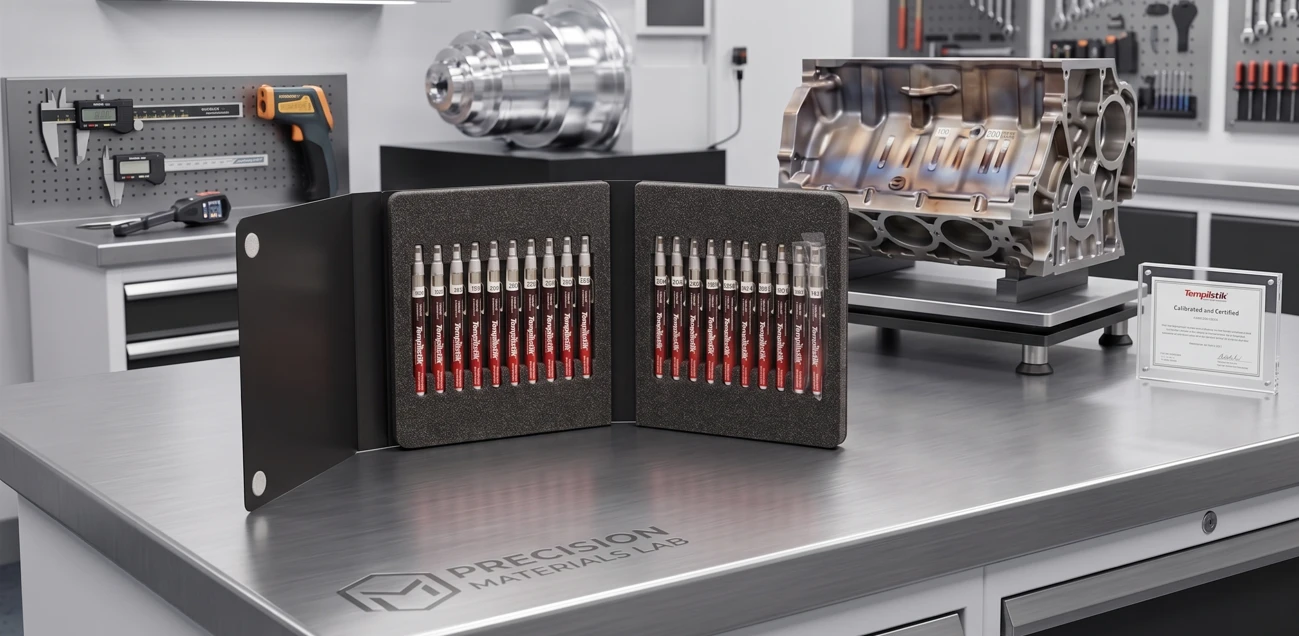
Tempilstik® vs laser pyrometer is one of the most common questions from welding engineers, QC inspectors, and maintenance teams who need to control preheat temperature, interpass temperature, and post-weld heat treatment. Both methods have genuine value, but their sources of error are very different — and that difference matters on a real construction site.
A laser pyrometer is convenient for fast, non-contact readings from a distance. A Tempilstik® temperature indicating crayon delivers a direct, physical signal at the metal surface at a specific rated threshold. For work that requires documented proof that a joint has reached the required temperature before welding begins, Tempilstik® is generally easier to control — because the result depends on the melting of a calibrated material, not on setting the correct emissivity for an unknown surface.
Practical summary: a laser pyrometer is well suited for rapid area scanning; Tempilstik® is better suited for threshold confirmation at the weld point — especially when the steel surface has varying colour, reflectivity, mill scale, or coating.
1. The Emissivity Problem with Laser Pyrometers
A laser pyrometer measures infrared radiation emitted from a surface and converts it to a temperature reading. The largest source of error is emissivity — the surface's ability to radiate thermal energy relative to a perfect blackbody. Polished steel, painted steel, stainless steel, oxidised surfaces, and oil-contaminated surfaces can all give different pyrometer readings even when their actual temperatures are nearly identical.
On a construction site, the operator rarely has time to re-set emissivity for each individual surface. The pyrometer display looks precise because it shows a specific number — but that number may not reflect the actual temperature at the weld preparation.
- A highly polished surface can cause the reading to appear lower than the actual temperature
- Dark, rusty, or oxidised surfaces may read differently from clean bare metal
- Measurement distance, angle, and spot size all affect reliability
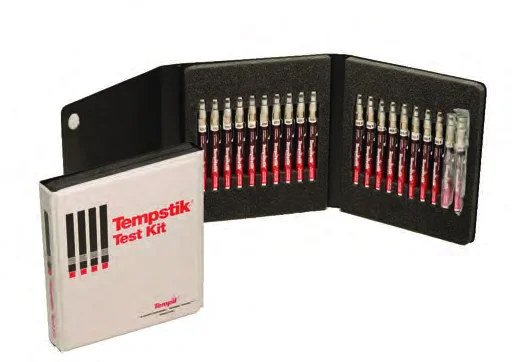
Tempilstik® gives an immediate go/no-go signal directly at the surface being checked.
2. How Tempilstik® Confirms a Temperature Threshold
Tempilstik® is a solid-state temperature indicating crayon. When the metal surface reaches the crayon's rated temperature, the mark melts visibly and immediately. The inspector does not interpret a range of numbers — they observe a clear pass/fail event: the mark either melted or it did not.
This approach is particularly useful for preheat temperature verification per AWS D1.1, ASME B31.3, pipe welding, structural welding, pressure vessel repair, and plant maintenance. When a WPS requires a specific minimum — for example 100°C (212°F), 150°C (302°F), or 200°C (392°F) — Tempilstik® gives the welder an immediate, unambiguous confirmation at exactly the right location.
- Select the crayon grade matching the WPS or QC requirement
- Clean the surface lightly to remove oil, moisture, or loose debris
- Heat the weld zone with a torch or resistance heater as specified
- Touch or mark the crayon onto the surface at the inspection point
- Observe the mark: if it melts cleanly, the surface has reached the rated temperature
3. Six-Criterion Comparison
When choosing a temperature measurement tool for welding work, the upfront purchase price is only one factor. Consider field reliability, result consistency, training requirements, and how well the method supports QC documentation.
| Criterion | Tempilstik® | Laser Pyrometer |
|---|---|---|
| Operating principle | Melts at rated temperature — physical chemistry | Reads infrared radiation — optical measurement |
| Surface condition effect | Low — contact-based measurement | High — depends on emissivity setting |
| Ease of use | Simple pass/fail: melted = reached temperature | Requires understanding of distance, angle, emissivity |
| QC documentation | Visible melt mark — can be photographed for records | Number on a display — must be noted separately |
| Outdoor wind / dust environments | Stable if surface is prepared | Prone to operator technique variation |
| Total cost of ownership | Purchase by temperature grade as needed | Device + batteries + periodic calibration + storage |
4. Total Cost of Ownership
A laser pyrometer appears attractive because it is reusable and can read any temperature. But for welding work governed by a clear WPS, the real cost is not just the device. If the operator sets the wrong emissivity — or uses the device's factory default on an incorrect surface — and signs off a joint that has not reached the required temperature, the cost of a weld repair, rework, and schedule delay can be many times larger than the original equipment investment.
Tempilstik® fits naturally into a threshold-verification model. A welding crew working to a defined set of WPS temperatures needs only a small selection of crayon grades — and the result at each joint is unambiguous. For maintenance contractors, EPC subcontractors, and fabrication shops, this makes Tempilstik® easy to standardise across welders and inspectors.
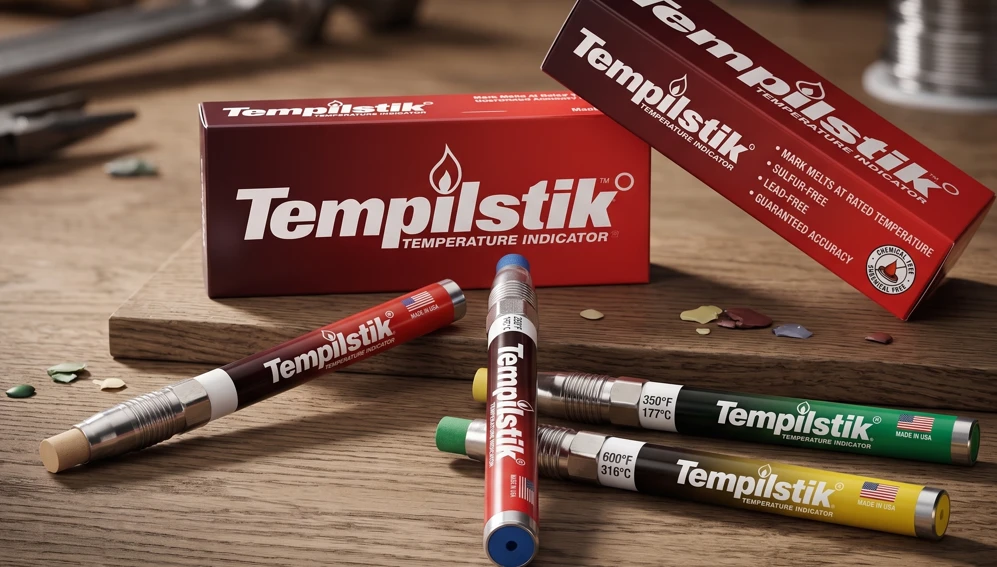
Tempilstik® crayon
Multi-grade test kit
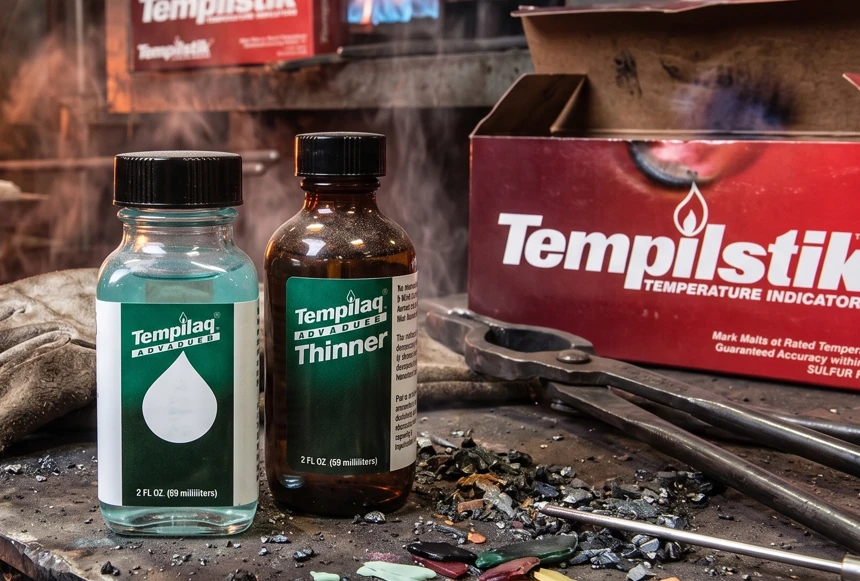
Tempilaq® liquid indicator
5. Which Tool for Which Situation?
In practice, choosing one and abandoning the other is rarely necessary. A laser pyrometer is well suited for initial area scanning, checking large zones, or monitoring temperature trends during heating. Tempilstik® excels at the decision point: confirming that a specific joint surface has reached the required temperature before welding begins or continues.
The optimal approach for most QC teams is to use the laser pyrometer for rapid observation during the heating phase — to identify areas that need more heat input — and then use Tempilstik® to make the definitive threshold confirmation at each weld location. This combines speed with reliability and eliminates the emissivity uncertainty where it matters most.
Order Genuine Tempilstik® Today
In stock in Ho Chi Minh City — nationwide delivery — VAT invoice — C/O available on request
View Tempilstik® Part Numbers +84 938 888 958 Request a QuoteRelated Articles & Products
- Tempilstik® — Genuine Product, All Part Numbers
- What Is Tempilstik®? Usage Guide
- Preheat Temperature Reference Table — AWS D1.1
- Tempilstik® vs Infrared Thermometer — In-Depth Technical Comparison
Frequently Asked Questions
Is Tempilstik® more accurate than a laser pyrometer for welding preheat?
For threshold confirmation in field conditions, generally yes. Tempilstik® melts at its rated temperature regardless of surface condition. A laser pyrometer requires the emissivity setting to match the actual surface — on typical construction-site steel with mill scale, light rust, or primer, an uncorrected reading can be 5–15°C off the real surface temperature, enough to result in a signed-off joint that has not actually reached the WPS minimum.
When is a laser pyrometer the better choice?
A laser pyrometer is the better choice for rapid scanning of large areas, continuous monitoring during heating, remote measurement when the surface is physically inaccessible, and initial screening to guide where more heat input is needed. It is also the only option when you need multiple temperature readings in quick succession across a wide area.
Can both tools be used together on the same job?
Yes — and this is the recommended approach. Use the laser pyrometer to observe the heating zone and identify cold spots. Then use Tempilstik® to make the definitive pass/fail confirmation at each specific weld location before striking the arc. The combination is faster than Tempilstik® alone and more reliable than a pyrometer alone for the final sign-off.